Introduction
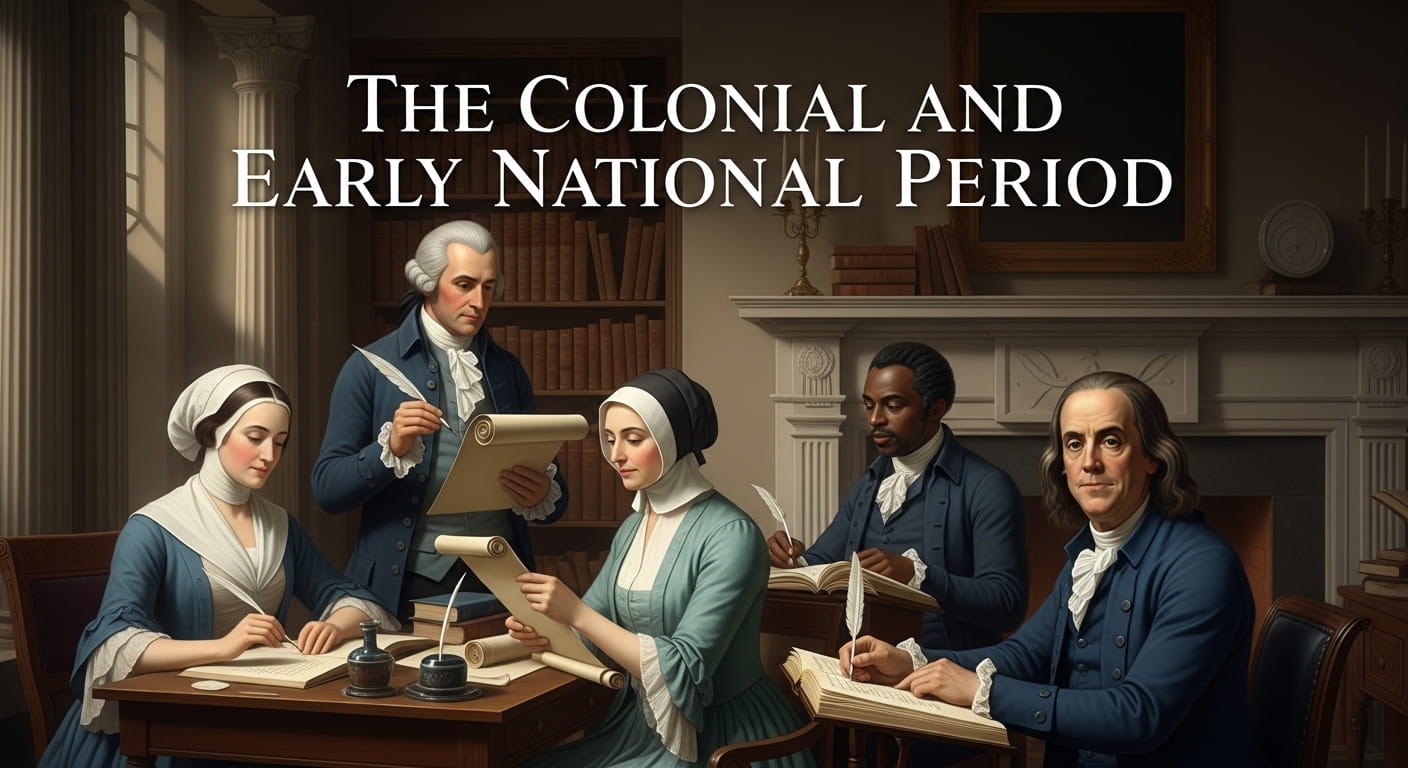
The Colonial and Early National Period marks the true beginning of American literature. Spanning from 1607 to approximately 1830, this era laid the foundation for a uniquely American literary voice. Furthermore, it represents a turning point in cultural and intellectual development. It was during this era that writing began to reflect the struggles, beliefs, and dreams of a growing nation. Consequently, literature became a powerful instrument of identity formation and cultural expression. Additionally, this period witnessed the emergence of distinctly American themes and forms. Writers moved gradually from imitating European models toward creating something genuinely new. Therefore, understanding this era is essential for understanding all of American literary history. Moreover, The Colonial and Early National Period produced some of the most enduring texts in the American tradition. This complete guide explores the evolution of literature across this remarkable era. It highlights the writers, genres, movements, and ideas that shaped the American literary imagination permanently.
1. Historical Background and Context
The Founding of the English Colonies
The Colonial and Early National Period began with the establishment of Jamestown, Virginia, in 1607. This was England’s first permanent settlement in the New World. Furthermore, settlers arrived from Europe carrying their traditions, beliefs, and literary forms. Consequently, early American writing was deeply shaped by European cultural inheritance. Additionally, the harsh conditions of colonial life demanded practical and purposeful writing. Settlers needed to document, persuade, instruct, and inspire in equal measure. Therefore, early American literature was functional before it became artistic. Moreover, religious conviction drove much of the earliest colonial writing. Puritan settlers in New England believed that writing served God’s purposes directly. Furthermore, their theological framework shaped every aspect of early literary production. Additionally, the Southern colonies brought different cultural priorities and different literary emphases. Consequently, American literature was regionally diverse from its very beginning. Therefore, the colonial context shaped the literature that emerged from it with permanent and lasting force.
The Puritan Influence on Early Literature
Puritanism was the dominant cultural and theological force of early American literature. Puritan settlers believed in the absolute sovereignty of God over all human affairs. Furthermore, they viewed writing as a spiritual obligation and a form of devotion. Consequently, sermons, diaries, spiritual autobiographies, and theological treatises dominated early colonial writing. Additionally, the Puritan emphasis on literacy was practically significant. Every believer needed to read Scripture personally and independently. Therefore, literacy rates in New England were unusually high by colonial standards. Moreover, the Puritan habit of spiritual self-examination produced a rich tradition of personal writing. Writers examined their own souls with painful honesty and documented their findings carefully. Furthermore, this habit of honest self-scrutiny became a permanent feature of American literary tradition. Additionally, Puritan theology shaped themes of sin, grace, mortality, and salvation throughout the period. Consequently, these themes echoed through American literature long after Puritanism itself declined.
From Colonies to Nation: A Literary Transformation
The transformation from colonial to national literature marked a profound cultural shift. As the Revolutionary period approached, American writers began asserting their independence. Furthermore, they rejected European literary models in favor of distinctly American forms and themes. Consequently, The Colonial and Early National Period witnessed a gradual but decisive literary revolution. Additionally, the founding of the new republic created urgent new literary needs. Writers needed to define American identity, defend American values, and inspire American citizens. Therefore, political writing became enormously important in this transitional era. Moreover, the period between independence and 1830 saw American literature come into its own. Writers began exploring themes of freedom, democracy, and national destiny with genuine conviction. Furthermore, they connected literary ambition to political purpose with remarkable energy. Additionally, this literary nationalism set the stage for the great flowering of The Romantic Period that followed. Consequently, the colonial and national periods were not separate but deeply interconnected literary eras.
2. Major Genres and Forms of the Period
Sermons and Theological Writing
Sermons were among the most important literary forms of The Colonial and Early National Period. Colonial ministers were the most educated members of their communities. Furthermore, their sermons reached the widest audiences of any literary form. Consequently, sermon writing developed into a sophisticated and highly influential art. Additionally, the most famous colonial sermon was Jonathan Edwards’s Sinners in the Hands of an Angry God of 1741. Edwards used vivid imagery and urgent theological argument to move his congregation. Therefore, his sermon demonstrated that religious writing could achieve genuine literary power. Moreover, sermons were not merely oral performances but carefully crafted written texts. They were printed and distributed widely throughout the colonies. Furthermore, their influence extended well beyond their original congregations. Additionally, theological writing more broadly shaped the intellectual life of colonial America. Writers engaged with questions of free will, predestination, grace, and human nature. Consequently, colonial theological writing laid the philosophical foundations for later American intellectual culture.
Diaries, Journals, and Personal Narratives
Personal writing flourished throughout The Colonial and Early National Period with genuine literary force. Colonial diaries and journals documented the daily realities of settlement and survival. Furthermore, they recorded the inner lives of people navigating extraordinary historical circumstances. Consequently, they represent some of the most vivid and authentic writing of the era. Additionally, the most famous colonial journal was William Bradford’s Of Plymouth Plantation. Bradford documented the Pilgrim settlement with clarity, honesty, and genuine narrative skill. Therefore, his journal stands as a foundational text of American prose literature. Moreover, personal narratives served multiple purposes simultaneously. They were private spiritual exercises, historical records, and literary achievements. Furthermore, they allowed writers to make sense of their experiences through the act of writing. Additionally, captivity narratives formed a particularly significant sub-genre. Mary Rowlandson’s narrative of her captivity among Native Americans became enormously popular. Consequently, personal narratives revealed the full range of colonial American experience with impressive literary power.
Political Pamphlets and Revolutionary Writing
Political writing became the defining literary form of the Revolutionary period. The Colonial and Early National Period produced some of the most powerful political prose in history. Furthermore, writers like Thomas Paine transformed political argument into literary art. Consequently, pamphlets like Common Sense reached enormous audiences and changed history directly. Additionally, the Declaration of Independence stands as one of the greatest pieces of political writing ever composed. Thomas Jefferson combined Enlightenment philosophy with remarkable rhetorical skill. Therefore, the Declaration became both a founding document and a literary masterpiece. Moreover, the Federalist Papers represented another remarkable achievement in political literature. Alexander Hamilton, James Madison, and John Jay wrote with philosophical depth and rhetorical precision. Furthermore, their arguments for the new Constitution remain intellectually relevant today. Additionally, revolutionary political writing demonstrated that practical purpose and literary excellence could coexist. Consequently, this tradition of engaged political writing became a permanent feature of American literature.
Poetry of the Colonial and National Periods
Poetry flourished throughout The Colonial and Early National Period in distinctive and important ways. Early colonial poets like Anne Bradstreet established poetry as a legitimate American literary form. Furthermore, her work combined Puritan theological conviction with genuine lyric gifts. Consequently, she became America’s first published poet and a foundational literary figure. Additionally, her Contemplations stands as one of the greatest meditative poems of the era. It meditates on nature, time, mortality, and God with remarkable philosophical depth. Therefore, it demonstrated that colonial American poetry could achieve genuine literary greatness. Moreover, Edward Taylor wrote extraordinary devotional poetry in the metaphysical tradition. His poems were not published until the twentieth century, but they represent a major literary achievement. Furthermore, Philip Freneau used verse to comment on political events and national identity. Additionally, Phillis Wheatley became the first African American published poet of genuine distinction. Consequently, poetry during this period was diverse, ambitious, and permanently significant.
3. Key Literary Figures of the Period
Anne Bradstreet: America’s First Poet
Anne Bradstreet stands as the most important poet of The Colonial and Early National Period. She was the first published poet in colonial America and a foundational literary figure. Furthermore, she wrote with intellectual depth, personal honesty, and remarkable lyric beauty. Consequently, her poems covered an extraordinary range of subjects and emotional registers. Additionally, her domestic and personal poems revealed the inner life of a colonial Puritan woman. Her Upon the Burning of Our House showed her capacity for genuine spiritual courage. Therefore, she demonstrated that women could achieve literary greatness in any era. Moreover, her Before the Birth of One of Her Children revealed her deep maternal courage. Furthermore, her love poetry including To My Dear and Loving Husband expressed genuine romantic passion. Additionally, she engaged classical, philosophical, and theological subjects with genuine scholarly authority. Consequently, Bradstreet’s complete achievement remains central to understanding The Colonial and Early National Period in its fullest literary dimension.
Benjamin Franklin: Pragmatist and Literary Genius
Benjamin Franklin was the most versatile literary figure of his era. He wrote with clarity, wit, and practical wisdom across multiple genres. Furthermore, his Autobiography stands as a foundational American text. Consequently, it established the self-made American as a central literary and cultural myth. Additionally, Franklin’s aphorisms in Poor Richard’s Almanack became enormously influential. They shaped American values of thrift, industry, and practical wisdom for generations. Therefore, Franklin demonstrated that literature could serve practical and civic purposes. Moreover, his political writing contributed significantly to the revolutionary cause. Furthermore, his scientific writing showed that American intellectuals could engage the world’s best minds. Additionally, his wit and irony anticipated later American literary traditions. Consequently, Franklin’s complete achievement made him one of the most significant figures of The Colonial and Early National Period. He proved that American literature could be simultaneously entertaining, instructive, and genuinely important to the life of the nation and the world.
Jonathan Edwards: Theologian and Literary Artist
Jonathan Edwards was the greatest theological writer of colonial America. His intellectual power was extraordinary by any standard of any era. Furthermore, he combined rigorous Calvinist theology with genuine literary gifts. Consequently, his sermons and treatises remain intellectually and aesthetically impressive. Additionally, his sermon Sinners in the Hands of an Angry God demonstrated the literary potential of religious writing. The imagery is vivid, urgent, and genuinely powerful even to modern secular readers. Therefore, Edwards proved that theological conviction could generate genuine literary excellence. Moreover, his philosophical treatise Freedom of the Will engaged Enlightenment thought with philosophical sophistication. Furthermore, his Personal Narrative stands as a masterpiece of colonial spiritual autobiography. Additionally, his influence extended far beyond his immediate congregation and era. Consequently, Edwards shaped American religious and literary culture with permanent force. Furthermore, his engagement with both Puritan tradition and Enlightenment thought made him a pivotal figure. Therefore, Jonathan Edwards stands as one of the towering intellectual figures of the entire colonial period.
Thomas Jefferson and the Founders as Writers
The American Founders were remarkable literary figures as well as political leaders. Thomas Jefferson wrote with classical elegance and philosophical precision. Furthermore, the Declaration of Independence remains a literary masterpiece of enduring significance. Consequently, it demonstrated that political documents could achieve genuine literary greatness. Additionally, Jefferson’s Notes on the State of Virginia showed his engagement with science, nature, and culture. Therefore, he proved that American intellectual life could match European standards of learning. Moreover, Alexander Hamilton wrote with extraordinary speed, clarity, and rhetorical power. Furthermore, his contributions to the Federalist Papers remain models of political argument. Additionally, James Madison’s precise and careful prose complemented Hamilton’s passionate energy. Consequently, together they produced one of the greatest collections of political writing in history. Furthermore, George Washington’s Farewell Address demonstrated that presidential rhetoric could achieve genuine literary distinction. Therefore, the Founders collectively made The Colonial and Early National Period one of the richest periods of political writing in the history of any nation.
Phillis Wheatley: Breaking Boundaries
Phillis Wheatley was one of the most remarkable literary figures of The Colonial and Early National Period. She was born in West Africa, enslaved as a child, and brought to Boston. Furthermore, she taught herself to read and write with astonishing speed and skill. Consequently, she became the first African American published poet in history. Additionally, her Poems on Various Subjects, Religious and Moral appeared in 1773. The volume demonstrated genuine poetic accomplishment within the neoclassical tradition. Therefore, she proved that African Americans could achieve the highest levels of literary excellence. Moreover, her poetry engaged themes of freedom, faith, and classical learning. Furthermore, her very existence as a published poet challenged the justifications for slavery directly. Additionally, she was examined by Boston’s leading intellectuals, who verified her authorship. Consequently, Wheatley’s achievement was both literary and profoundly political simultaneously. Therefore, she stands as one of the most significant and courageous literary figures of the entire colonial era.
Charles Brockden Brown: Pioneer of American Fiction
Charles Brockden Brown pioneered American fiction at the close of this period. He was the first American to earn a living primarily through writing. Furthermore, he wrote psychological Gothic novels that explored the dark side of human nature. Consequently, his work anticipated much later American literary tradition. Additionally, his novel Wieland explored religious fanaticism, violence, and psychological instability. Therefore, it demonstrated that American fiction could engage serious philosophical and psychological themes. Moreover, Brown drew from European Gothic traditions while creating something distinctly American. Furthermore, his engagement with the American landscape gave his fiction a distinctive national identity. Additionally, he explored social issues, including gender, race, and class, with unusual candor. Consequently, Brown’s fiction connected The Colonial and Early National Period to the literary movements that followed. Furthermore, his influence on later American writers, including Edgar Allan Poe, was significant. Therefore, Charles Brockden Brown stands as a crucial transitional figure between colonial and romantic American literature.
4. Major Themes of the Period
Religion, Faith, and Spiritual Life
Religion was the central theme of The Colonial and Early National Period throughout its entire span. Puritan settlers understood all of life through a theological framework. Furthermore, they believed that history itself was the unfolding of God’s providential plan. Consequently, religious themes permeated every form of writing in early colonial America. Additionally, the Great Awakening of the 1730s and 1740s intensified religious literary production. Revivalist preachers like Jonathan Edwards and George Whitefield inspired new waves of spiritual writing. Therefore, religious experience remained a primary subject of American literature. Moreover, the relationship between religious faith and civic virtue shaped much of the national period’s writing. Furthermore, Deism influenced many Founders while Evangelicalism shaped ordinary Americans. Additionally, the tension between these religious orientations generated rich literary debate. Consequently, religion was never merely a background element but a central literary preoccupation. Therefore, understanding the religious dimensions of The Colonial and Early National Period is absolutely essential for understanding its literature.
Liberty, Freedom, and Political Identity
Liberty and freedom emerged as the defining themes of the national period’s literature. The Revolution transformed political ideals into urgent literary subjects. Furthermore, writers like Tom Paine argued for independence with passionate and accessible prose. Consequently, the concepts of liberty and natural rights became central to American literary culture. Additionally, the Declaration of Independence gave these ideas their most eloquent literary expression. Jefferson’s assertion that all men are created equal resonated far beyond its immediate political context. Therefore, liberty became a permanent theme of American literary imagination. Moreover, the meaning of freedom was contested and complex from the very beginning. Furthermore, enslaved African Americans wrote about freedom with particular urgency and moral power. Additionally, women’s writers began questioning the limitations of freedom in a patriarchal society. Consequently, The Colonial and Early National Period established liberty as a theme while also revealing its contradictions. Therefore, the literature of freedom during this era was simultaneously inspiring and deeply problematic in its exclusions.
Nature and the American Landscape
The American landscape became an increasingly important literary subject during this period. Early settlers regarded nature as both a physical challenge and a spiritual sign. Furthermore, Puritan writers read the natural world as a book of divine symbols and meanings. Consequently, nature writing carried theological as well as aesthetic significance from the beginning. Additionally, travel narratives and natural histories documented the astonishing diversity of American environments. Writers observed and recorded the New World’s flora, fauna, and geographical features carefully. Therefore, nature writing contributed to both science and literature simultaneously. Moreover, as the national period developed, nature took on new symbolic significance. The American wilderness came to represent freedom, possibility, and national distinctiveness. Furthermore, poets and essayists began celebrating the landscape as a source of national identity. Additionally, this engagement with nature anticipated the major literary movements of the Romantic period. Consequently, the Romantic Period and American Renaissance built directly on the foundations laid during this earlier era.
Identity, Race, and the Question of Belonging
Questions of identity, race, and belonging were central to The Colonial and Early National Period. The new nation was built on profound contradictions between its ideals and its realities. Furthermore, the Declaration of Independence proclaimed human equality while slavery continued to expand. Consequently, questions of racial justice haunted American literature from the very beginning. Additionally, Native American perspectives began finding expression in written literature during this period. Their voices offered powerful counter-narratives to the triumphalist stories of colonial settlement. Therefore, the literature of this period was never simple or monolithic in its perspectives. Moreover, the question of what it meant to be American was genuinely contested. Furthermore, immigrant communities brought diverse cultural traditions that enriched the literary landscape. Additionally, women writers challenged the definition of American citizenship through their literary work. Consequently, The Colonial and Early National Period was characterized by both the assertion and the contestation of identity.
Death, Mortality, and Spiritual Preparation
Death and mortality were constant literary preoccupations throughout this period. Colonial life made mortality a daily and unavoidable reality. Furthermore, disease, childbirth, warfare, and harsh conditions claimed lives with terrible regularity. Consequently, writers addressed death with practical urgency and genuine theological seriousness. Additionally, the Puritan habit of memento mori — remembering death — shaped literary culture profoundly. Writers prepared for death through writing and helped others prepare through their published works. Therefore, the literature of death during this period was not morbid but genuinely useful. Moreover, Anne Bradstreet’s poems on mortality remain among the most moving in American literature. Furthermore, her Contemplations meditates on time and eternity with philosophical depth. Additionally, funeral elegies and memorial poems formed a significant literary sub-genre. Consequently, the literature of death during The Colonial and Early National Period was both personally authentic and culturally central. Therefore, mortality shaped the literary imagination of this era with permanent and enduring force.
5. Women Writers of the Period
Breaking Barriers Through Literature
Women writers made essential contributions to The Colonial and Early National Period. They wrote despite facing severe social restrictions on their public literary roles. Furthermore, they found ways to express intellectual and political ideas through available forms. Consequently, their contributions were both personally courageous and culturally significant. Additionally, poetry, letters, and essays gave women a literary voice within acceptable social boundaries. They used these forms to engage politics, theology, family, and national identity. Therefore, women’s writing during this era was simultaneously constrained and remarkably ambitious. Moreover, Anne Bradstreet pioneered the tradition of women’s literary achievement in America. Furthermore, her The Prologue directly addressed male dismissiveness of female literary ambition. Additionally, Mercy Otis Warren contributed political satire and historical writing to the revolutionary cause. Consequently, women writers proved that female intellectual authority was genuine and culturally valuable. Therefore, understanding women’s literary contributions is essential to understanding the full scope and complexity of this remarkable literary period.
6. The Revolutionary Period and Its Literature
The Literature of Revolution
The Revolutionary period transformed American literary culture fundamentally and permanently. Writers became active participants in the political struggle for independence. Furthermore, pamphlets, essays, songs, and poems served the revolutionary cause with genuine effectiveness. Consequently, literature became a weapon as well as an art form during this extraordinary period. Additionally, Thomas Paine’s Common Sense demonstrated the power of accessible political writing. His plain prose style reached ordinary Americans who might have found more elevated rhetoric inaccessible. Therefore, Paine proved that literary democratization could serve revolutionary political purposes. Moreover, the revolutionary period produced an extraordinary number of significant political texts. Furthermore, newspapers became crucial vehicles for literary and political expression. Additionally, satirical writing flourished as writers mocked British authority with wit and anger. Consequently, this period reached its political and literary climax during the revolutionary era. The literature of this moment shaped the consciousness of a generation and changed the course of history with permanent and irreversible force.
7. Print Culture and the Growth of Literature
The Rise of the Printing Press
The growth of print culture was essential to the literary development of this period. With the rise of printing presses in cities like Boston and Philadelphia, literature became more accessible. Furthermore, books, newspapers, and pamphlets reached wider audiences than ever before. Consequently, literacy rates improved across the colonies with significant cultural effects. Additionally, reading became a communal activity shared across social classes and communities. Writers could now reach large audiences and respond to public debates with remarkable speed. Therefore, print culture transformed the relationship between writers and readers fundamentally. Moreover, the first American newspaper appeared in Boston in 1690, creating new literary opportunities. Furthermore, Benjamin Franklin used his printing business to spread ideas and build literary culture. Additionally, almanacs like Poor Richard’s reached ordinary households throughout the colonies. Consequently, print culture democratized literary access and expanded the reading public significantly. Therefore, the growth of printing was among the most important developments of the period.
8. The Transition to the Romantic Period
This period planted the seeds of later American Romanticism. Writers began expressing a growing interest in nature, emotion, and individual experience. Furthermore, the engagement with the American landscape laid the foundations for later Romantic nature writing. Consequently, the transition between periods was gradual rather than abrupt. Additionally, the emphasis on individual conscience and personal spiritual experience prepared the ground for Transcendentalism. Writers like Jonathan Edwards already showed the intensity of personal religious experience. Therefore, colonial writing contained within itself the beginnings of later literary developments. Moreover, the democratic ideals of the revolutionary period inspired Romantic celebrations of ordinary American life. Furthermore, the critique of European tradition encouraged original American literary experimentation. Additionally, African American and women writers were already challenging the boundaries of the literary tradition. Consequently, the Romantic Period Literary Giants built directly on this remarkable foundation. Therefore, this foundational era was not a separate world but a living source for everything that followed.
Washington Irving and the First American Fictionists
Washington Irving stands at the transition between the colonial and Romantic periods. His Sketch Book of 1819 created some of the most beloved American stories. Furthermore, Rip Van Winkle and The Legend of Sleepy Hollow established American fiction as a serious literary form. Consequently, Irving demonstrated that American themes could generate genuinely great literature. Additionally, he drew from American folklore, landscape, and history to create something new. His distinctive blend of humor, nostalgia, and imagination was entirely his own. Therefore, Irving proved that American literature had achieved genuine maturity and originality. Moreover, James Fenimore Cooper created the first great American novel series with the Leatherstocking Tales. Furthermore, his Last of the Mohicans engaged themes of wilderness, frontier, and Native American experience. Additionally, his Natty Bumppo character became an iconic figure of American literary mythology. Consequently, both Irving and Cooper pointed directly toward the great flowering of the Romantic Period that followed.
9. Legacy and Enduring Significance
The Lasting Impact on American Literature
The legacy of this literary period extends across all of subsequent American literary history. The themes established during this era recurred in every later literary period. Furthermore, questions of freedom, identity, faith, and nature shaped American writing permanently. Consequently, later writers constantly returned to the colonial and national period for inspiration. Additionally, the formal innovations of this period created lasting literary models. The personal essay, the political pamphlet, and the spiritual autobiography all remained vital forms. Therefore, the generic innovations of this period proved permanently valuable to American writers. Moreover, the democratic impulse of revolutionary writing shaped the American literary tradition’s accessible tone. Furthermore, the engagement with social justice issues anticipated major later literary movements. Additionally, the tradition of women’s writing pioneered by Bradstreet and Wheatley created essential foundations. Consequently, the era was not merely a historical curiosity but a living source for all American literature. For comprehensive literary resources, visit englishlitnotes.com and americanlit.englishlitnotes.com.
Why This Period Still Matters
This era remains urgently relevant to every modern reader. The values explored during this era — liberty, justice, faith, and identity — are still being debated. Furthermore, modern writers revisit the period not merely as history but as a living cultural conversation. Consequently, the literature of this era continues to generate new interpretations and insights. Additionally, American political culture still draws from the rhetoric and ideals of the revolutionary writers. The Declaration of Independence remains a living document rather than a historical artifact. Therefore, the literature of this period speaks directly to contemporary concerns. Moreover, the social contradictions of the era — between liberty and slavery, equality and exclusion — anticipate ongoing American struggles. Furthermore, the voices of marginalized writers like Wheatley speak with particular power to modern audiences. Additionally, the environmental engagement of colonial nature writing resonates with contemporary ecological concerns.
Conclusion
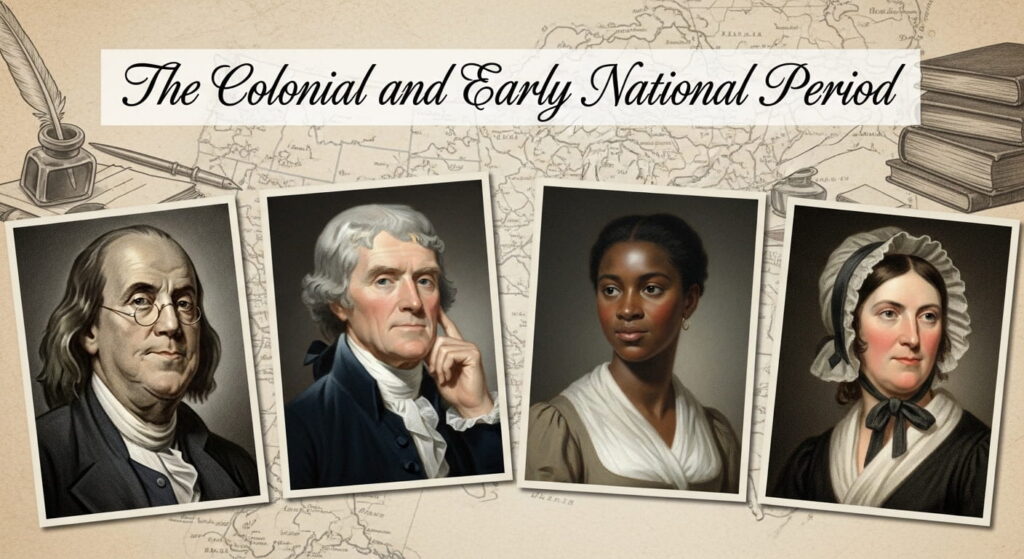
The Colonial and Early National Period stands as the essential foundation of all American literature. It produced writers of extraordinary courage, intellectual power, and lasting literary achievement. Furthermore, it established the themes, forms, and values that shaped American writing for centuries. Consequently, every subsequent American literary movement built on foundations laid during this era. Additionally, the period demonstrated that American literature could achieve genuine greatness from its very beginnings. Writers like Bradstreet, Franklin, Edwards, Jefferson, and Wheatley proved that colonial America was intellectually and artistically vital. Therefore, this period commands our deepest admiration and most careful scholarly attention. Moreover, this period was not merely a preparation for something greater. It was itself a great literary era worthy of sustained study and genuine celebration. Furthermore, its engagement with questions of faith, freedom, identity, and nature remains permanently relevant. Additionally, its voices — including those long marginalized — continue to speak with power and urgency today.
Notes on English Literature: http://englishlitnotes.com
Moral Story in English – The King and the Spider: https://englishwithnaeemullahbutt.com/2025/05/10/the-king-and-the-spider/
Grammar Puzzle Solved by Naeem Sir:
https://grammarpuzzlesolved.englishlitnotes.com/connotative-and-denotative-meanings/
Colonial and Early National Period of American Literature: https://americanlit.englishlitnotes.com/anne-bradstreet-biography/
Discover more from Welcome to My Site of American Literature
Subscribe to get the latest posts sent to your email.